Triathletes obsess over watts, pace, and CTL—but the biggest performance booster might be the 8 hours you spend in bed each night. The Eight Sleep Pod system promises deeper sleep, faster recovery, and cooler nights, especially for athletes who “run hot” after hard workouts. This in‑depth review looks at the Eight Sleep Pod 5 and Pod 3 specifically for triathletes and answers a key question: is this the best mattress of 2026 for serious endurance athletes?
Why Sleep Quality Matters So Much for Triathletes
Triathletes often struggle with sleep because of early swims, late trainer sessions, high training load, and pre‑race anxiety. Hard evening workouts raise core temperature and sympathetic drive, which makes it harder to fall asleep and stay asleep.
- After intense training, elevated body temperature can delay the natural cooling needed to initiate sleep and maintain deep sleep.
- Research points to an optimal skin temperature “microclimate” around 31–35°C (87–93°F), which usually means a cooler room and good thermal regulation from the bed.
Eight Sleep’s core promise is simple: actively control bed temperature all night long to keep you in that ideal zone, reduce wake‑ups, and improve recovery.
What Is the Eight Sleep Pod System?
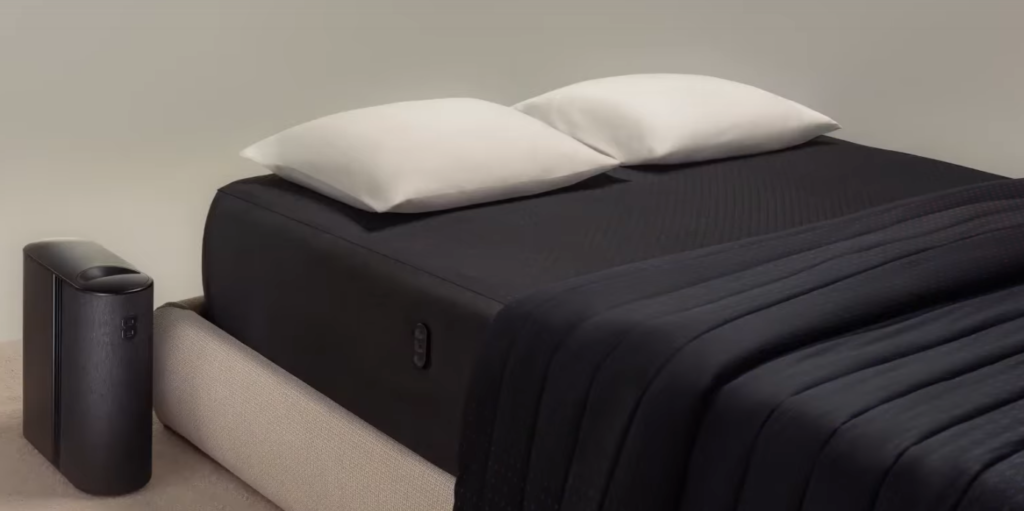
The Eight Sleep Pod is a smart cooling and heating mattress cover with an external hub that turns almost any mattress into a temperature‑controlled sleep pod. Instead of buying a whole new mattress, you add a fitted cover with water channels and sensors, plus a bedside unit that circulates water at precise temperatures.
Key components include:
- A smart cover that fits over your mattress and contains sensors for heart rate, respiratory rate, HRV, and sleep stages.
- A control hub that heats or cools water, then circulates it through the cover to change the bed’s surface temperature.
- Dual zones so each side of the bed can have its own temperature schedule and metrics profile.
For triathletes, the big differentiator is that the Pod doesn’t just track sleep like a watch or ring—it actively intervenes via temperature to improve it.
Eight Sleep Pod 5 vs Pod 3 for Triathletes
Eight Sleep’s Pod 3 made the system popular, while the newer Pod 5 pushes performance, sensors, and intelligence further. Both can help triathletes sleep cooler and recover better, but there are important differences to consider in 2026.
Feature Comparison: Pod 5 vs Pod 3
For many triathletes, Pod 3 already delivers the essential benefits: powerful cooling, dual zones, and detailed sleep and recovery data. Pod 5 makes the most sense if you live in a very hot climate, want the best possible data and temperature control, or plan to rely heavily on the system for years.
Setup and First Use: What to Expect
If you can mount a smart trainer and sync a cycling head unit, you can set up an Eight Sleep Pod. Plan for about 30–45 minutes for the first installation.
Typical setup steps:
- Place the Pod 5 or Pod 3 cover on your existing mattress and connect the hoses to the hub.
- Fill the hub with distilled water (plus the recommended solution) and run the priming cycle.
- Connect to Wi‑Fi, pair with the app, and define your side of the bed and your partner’s if applicable.
Once installed, the surface feels like a normal mattress—there are no obvious bumps or hard edges from the channels. For couples, separate temperature schedules are a major win: one side can be “Pod 5 cold” after a hot brick workout while the other stays comfortably warm.
How Temperature Control Works (Manual vs Autopilot)
You can use the Pod 5 or Pod 3 in two main ways: manual curves or Autopilot. Both give triathletes a level of thermal control you simply cannot get from a normal mattress or topper.
- Manual mode: Set a custom temperature curve for the night on a scale (e.g., -10 to +10), making the bed cooler when you first get in and slightly warmer toward morning.
- Autopilot: Let the system automatically adjust bed temperature throughout the night based on your body’s signals, sleep stages, and bedroom conditions.
This can be transformative for:
- Evening high‑intensity sessions where core temperature stays high long after training.
- Hot summer nights before key training days or races.
- Recovery blocks where you want to maximize deep sleep and stable HRV.
Eight Sleep Pod 5 Review 2025: I Tested the $6,000 Smart Bed for 4 Months – Here’s What Actually Happened
Sleep and Recovery Metrics for Data‑Driven Athletes
Eight Sleep doesn’t just cool your bed; it also provides a deep data set around your sleep and recovery. For triathletes who already track TSS, CTL, and HRV, this becomes another key dashboard.
Metrics include:
- Total sleep time, time in light, deep, and REM sleep.
- Resting heart rate, respiratory rate, and nightly HRV trends.
- Sleep latency (how long you take to fall asleep) and wake‑after‑sleep onset.
Because the Pod’s sensors are under your entire body, HR and HRV data is often more consistent than readings from a wrist‑based watch that can shift or lose contact overnight. Over weeks and months, you can see how training blocks, travel, and race stress impact your recovery—and adjust load accordingly.
Eight Sleep vs Wearables for Recovery Tracking
Many triathletes rely on watches or rings (Garmin, Apple Watch, Oura, Whoop) for sleep and recovery feedback, but these have limitations. Wrist‑based optical sensors can be inconsistent, especially for precise beat‑to‑beat measurements.
Eight Sleep’s advantages include:
- Multi‑sensor coverage under the body instead of a single wrist or finger location.
- Strong correlation with ECG for heart rate and HRV trends according to published validations.
- Automatic night‑long monitoring with no device to wear or charge on your body.
For triathletes, a common setup is: Eight Sleep for nightly HRV, resting HR, and sleep quality; watch or ring for all‑day activity, training, and readiness markers.
Real‑World Use Cases for Triathletes
The Pod 5 and Pod 3 shine most in specific scenarios that are common in triathlon training and racing.
Particularly strong use cases:
- Hot sleepers in warm climates who regularly wake up sweaty or restless, especially after late rides or runs.
- Long‑course and high‑volume athletes where chronic fatigue makes every marginal gain in sleep quality meaningful.
- Masters athletes and peri‑/menopausal women dealing with hot flashes and night sweats that disrupt sleep.
Being able to set an ultra‑cool Pod setting after a steamy summer brick or a marathon‑pace long run can be the difference between thrashing in bed and waking up genuinely refreshed.
Daily Experience: How It Feels to Use Eight Sleep
After a short tuning period to dial in your ideal temperature curve, day‑to‑day life with Eight Sleep becomes simple. Most athletes report that the Pod “disappears” in a good way—you just get into a bed that’s already at the perfect temperature.
Typical effects for triathletes:
- Fewer nighttime wake‑ups and less tossing and turning due to overheating.
- Lower overnight resting heart rate and more stable HRV during consistent training blocks.
- Easier early‑morning wake‑ups thanks to warming and gentle vibration alarms that hit only your side of the bed.
For heavy training weeks, this can feel like adding a new recovery tool to your arsenal—alongside compression boots, massage guns, and well‑timed off days.
Eight Sleep Pod 3 Review: A Game-Changer for Triathlete Recovery – The New Eight Sleep Pod 5
Is Eight Sleep the Best Mattress of 2026 for Athletes?
“Best mattress 2026” searches often focus on comfort, materials, and price for the average person—but endurance athletes have different needs. Compared to standard high‑end mattresses, Eight Sleep Pod 5 and Pod 3 stand out in a few critical ways for triathletes.
- Active cooling and heating directly address post‑workout heat and night sweats in a way passive foam or springs cannot.
- Integrated HRV, heart rate, and sleep tracking turn your bed into a recovery tool, not just a place to lie down.
- Dual‑zone control means your race‑prep needs don’t have to match your partner’s preferences.
For serious triathletes and endurance athletes, Eight Sleep is a top contender for “best mattress 2026” precisely because it combines thermoregulation and recovery metrics, not just comfort.
Reliability, Tech, and the “Eight Sleep AWS Outage” Question
Because Eight Sleep is a connected smart system, it relies on cloud infrastructure to deliver some of its features. Searches like “Eight Sleep AWS” and “Eight Sleep AWS outage” show that users are rightly curious about what happens when cloud services have issues.
In practical terms:
- Core temperature control is designed to follow your saved schedules even when the app or cloud features are temporarily unavailable.
- More advanced features, live adjustments, or insights can be limited during an outage or connectivity problem.
For triathletes, the main takeaway is that while Eight Sleep functions best with a stable internet connection, short cloud disruptions are unlikely to completely remove the cooling and heating benefits of the Pod.
Pros of Eight Sleep for Triathletes
Eight Sleep Pod 5 and Pod 3 offer several strengths uniquely valuable to endurance athletes.
Big advantages:
- Powerful active cooling and heating that directly tackles post‑workout heat, summer training, and hot flashes.
- Accurate, consistent HR and HRV tracking from mattress‑based sensors for better recovery decisions.
- Deep sleep analytics that tie directly into how you plan training load and taper.
- Dual‑zone support so you can optimize your side of the bed without compromising your partner’s comfort.
For triathletes stacking long rides, track intervals, and brick sessions week after week, these benefits can add up to real performance gains over a season.
Cons and Limitations You Should Know
Eight Sleep is not perfect, and it is not the right solution for every triathlete.
Key downsides:
- High price: Both Pod 5 and Pod 3 are premium products, especially when compared to basic cooling toppers or conventional mattresses.
- Subscription model: The most powerful features (Autopilot, advanced insights) require an ongoing membership, increasing long‑term cost.
- App dependence: Configuration and control are app‑centric, which may clash with strict “no phone in the bedroom” habits.
- Tech complexity: As with any connected device, Wi‑Fi, firmware updates, and occasional glitches (including potential cloud / AWS issues) are part of the package.
If your budget is limited, or your sleep is already consistently excellent, starting with basic sleep hygiene upgrades (cooler room, blackout curtains, caffeine timing, better pre‑sleep routine) might be smarter before stepping up to Eight Sleep.
Eight Sleep Pod 5 vs Pod 3: Which Should You Buy?
For triathletes choosing between the two main options in 2026, the decision comes down to budget, climate, and how much you value cutting‑edge features.
- Choose Eight Sleep Pod 5 if:
- You live in a hot or humid climate where maximum cooling power really matters.
- You want the latest sensors, the most refined Autopilot behavior, and plan to lean heavily on data.
- You see this as a long‑term investment in recovery, on the same level as a high‑end bike or premium race wheels.
- Choose Eight Sleep Pod 3 if:
Both systems can dramatically improve comfort and recovery for triathletes, but Pod 5 makes the most sense for those who demand the absolute best and are willing to pay for it.
Final Verdict: Is Eight Sleep Worth It for Triathletes?
Eight Sleep Pod 5 and Pod 3 are not just “nice to have” gadgets—they can become a central part of your recovery strategy if you are a serious triathlete. They make the most sense if:
- You train 8+ hours per week and race long‑course or multiple events each season.
- You struggle with sleep due to overheating, heavy training blocks, or hormonal changes.
- You already invest in coaching, gear, and race travel and want to protect that investment with better recovery.
If your sleep is rarely an issue, basic sleep hygiene might be enough. But if heat and restless nights are holding back your training and racing, Eight Sleep Pod 5 or Pod 3 can be one of the most impactful “upgrades” you make in 2026—for performance, health, and everyday life.