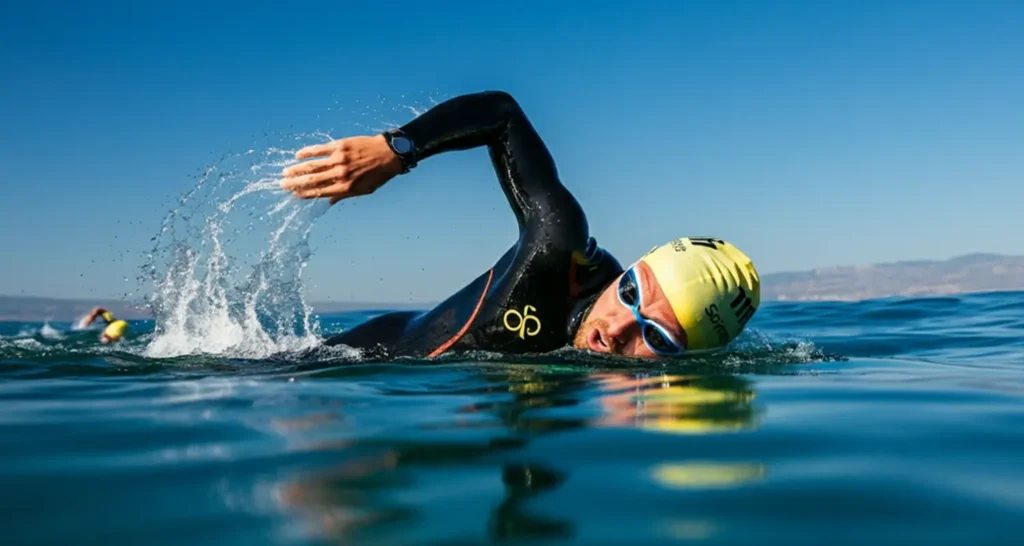

For most beginners, the first leg of a triathlon is both exciting and terrifying. The race starts in the water, and how you handle the swim often determines how confident, calm, and strong you feel for the rest of the day.
What Is the First Leg of a Triathlon?
In a traditional triathlon, the first leg is the swim, followed by the bike and then the run.
Whether you race a sprint, Olympic, half, or full Ironman, you always begin in the water before heading into transition 1 (T1) to grab your bike.
The swim can take place in:
- Pools (often for very beginner-friendly or winter events)
- Lakes and reservoirs
- Rivers or the ocean, which add current, chop, and waves to the challenge
Why the Swim Comes First
The order of events in a triathlon is not random. There are clear reasons why the swim is the first leg.
- Safety first: Swimming is the most hazardous discipline; starting it while you are fresh greatly reduces risk of panic, cramping, or dangerous fatigue in open water.
- Better crowd management: The water naturally spreads athletes out, which reduces congestion and crash risk on the bike course.
- Smart muscle sequencing: After the swim, the bike lets your upper body recover while your legs take over, before finishing with the more forgiving discipline of running.
Unlock Your Speed: The Ultimate 1-Hour Swim Workout for Speed
Why the First Leg Feels So Hard
Swimming is often the shortest part of the race in terms of time, but for many triathletes it’s the most mentally and technically demanding.
Common reasons the first leg feels tough:
- Open-water anxiety: Dark water, limited visibility, and the presence of other athletes can trigger panic or shallow breathing.
- Contact and chaos: Mass or wave starts mean bumping, tapping feet, and occasional kicks or elbows as everyone fights for position.
- Sighting and staying straight: Unlike the pool, there are no lane lines; if you do not sight properly, you can swim extra distance and waste energy.
- Conditions: Waves, chop, currents, and cold water all increase the physical and mental load of the swim leg.
Yet, when you learn to manage these factors, the swim becomes an opportunity: a calm, efficient first leg sets up a much stronger bike and run.
How to Train for the First Leg of a Triathlon
If you want to complete the first leg of a triathlon confidently, your training needs to go beyond simply swimming laps in a pool.
Key training priorities:
- Technique first, then volume: Efficient stroke mechanics let you cover the distance with less energy, leaving more for the bike and run.
- Breathing rhythm: Practice bilateral or consistent breathing every 2–3 strokes so you can stay relaxed and avoid early fatigue.
- Body position and balance: Aim for a horizontal, “gliding” position with hips high to minimize drag instead of “swimming uphill” with the head too high.
- Open-water simulations: Even if you mostly train in a pool, include sessions where you practice continuous swimming, sighting, and turning without touching walls.
A simple week for a beginner focusing on the first leg might include:
- One technique-focused session (drills for catch, body roll, and balance)
- One endurance session (long, steady intervals to build confidence over race distance)
- One “race skills” session (sighting, short race-pace intervals, and swimming in a group if possible)
Essential Skills to Complete the First Leg
To not only survive but actually complete the first leg of a triathlon with confidence, you need specific open-water skills.
Most important skills:
- Sighting: Every 4–8 strokes, lift your eyes just above the surface to spot a buoy or landmark so you stay on course without losing rhythm.
- Comfort with contact: Practice swimming close to others—on their hip or feet—so race-day proximity feels normal rather than stressful.
- Backup strokes: Know a “safety stroke” (breaststroke or simple floating on your back) you can use briefly if you panic, need to reset your breathing, or get disoriented.
- Starts and turns: Rehearse fast but controlled starts and tight turns around buoys to avoid spikes in heart rate and panic.
These skills mean that when things get messy—chop, crowds, nerves—you have tools to manage the situation instead of burning matches early.
Race-Day Strategy for the Swim Leg
Even with solid fitness, how you approach race morning and the opening minutes of the swim can make or break the first leg.
Practical swim leg strategies:
- Warm up properly: If allowed, spend a few minutes in the water before the start to get used to the temperature, practice a few sighting strokes, and calm your breathing.
- Seed yourself honestly: Do not start at the very front if you are nervous or slower; line up to the side or a bit further back to avoid the worst of the chaos.
- Start controlled, not sprinting: The adrenaline surge at the horn is real, but going out too hard spikes your heart rate and can trigger panic; instead, build into your effort.
- Focus on form cues: Think “long relaxed stroke,” “exhale underwater,” and “sight, then breathe” rather than obsessing over speed.
- Use micro-resets: If you feel overwhelmed, switch briefly to breaststroke or float on your back, control your breathing, then roll back into freestyle and continue.
Approach the first leg as a controlled effort that gets you out of the water feeling in control, not as an all-out sprint. That calm confidence will pay off massively once you hit the bike and the run.